


No products in the cart.

The knowledge and experience was passed on by Alojz and Antonija to their son Anton, who in turn passed it on to his son Gorazd. Gorazd continues the family tradition and maintains the good name and top quality of pumpkin oil processing. The quality of the oil, which is also an officially protected Slovenian product, has been recognised around the world and Kocbek's oil is exported to various countries on different continents.
At the Kocbek oil mill, pumpkin oil production has a long family tradition dating back to 1929. What is the secret of your success?
We are keeping alive a tradition that was started by my grandfather. The machines and the premises are still what they were years ago. Today, it all has a touch of nostalgia. But it is also true that technology is no different from what it was a hundred years ago. Even if we were to build a new oil mill with new machinery, the production method would still be the same, it would just be bigger, differently designed or more powerful machines, presses. In the processing of pumpkin seed oil, we use exclusively Slovenian raw material, which gives the highest possible quality of oil, both in terms of taste and in terms of its nutritional composition. We strive to ensure that our products are of excellent quality and only the best are offered to the end consumer, not only to selected restaurants and chefs. In our range of products, which is constantly updated, you will find handmade Srast chocolates with pumpkin seeds and pumpkin oil, as well as chocolates with various Slovenian ingredients, pasta and biscuits with pumpkin seeds and pumpkin oil, salami with pumpkin seeds and pumpkin oil, spreads, pickled zucchini, lip balm, etc.
And there are several types of pumpkin seed oil on the shelves. What is the difference?
The oils, packaged under a light-coloured label with the Silver Kocbek logo, are made from seeds we buy from local growers and meet our processing criteria. We have a long history of producing such oils and in the hot-pressing process, the seeds for these oils are milled in a roller mill where the rollers and the metal are. These oils are originally intended for sale on the domestic market, from shops to pubs, restaurants and various outlets. The oils, packaged under a dark-coloured label with a gold logo, are made from seeds that are cleaned and sorted before processing. This is done using a machine that removes impurities (pumpkin flesh, peelings, peeled or damaged seeds - what has been picked up or damaged by hand or by machine when picking the seeds out of the pumpkin) to produce clean and undamaged seeds, which in turn produce oils of the highest possible quality. In the hot-pressing process, the seeds are ground into real stones, giving the oil an even darker colour, greater density and a slightly different taste. These oils are originally intended for sale on foreign markets, but at home you can only find them in restaurants, wine bars, selected - specialised - shops.

Your oil mill is known for its unique cold-pressed pumpkin oil, which is very healthy on top. It is known to alleviate male prostate problems...
In the cold-pressing process, there is no seed treatment. The seeds are not ground, heated or roasted, but the oil is extracted from the whole seeds using a special press, where the temperature of the oil, due to the pressure and friction in the press, must not exceed 40 degrees Celsius. This gives it a slightly lighter greenish-reddish colour, a delicate smell and a taste similar to that of raw pumpkin seeds.
The yield from processing is significantly lower, as at least six kilograms of pumpkin seeds are needed to produce one litre of cold-pressed pumpkin oil. It contains approximately 80% unsaturated fatty acids and has a favourable ratio of omega 3, 6 and 9 fatty acids. Cold-pressed oils preserve absolutely all the vitamins and minerals in this way and are therefore the healthiest, if we can call it that. Far from being harmful, however, hot-pressed oils are. Specifically, for the alleviation of prostate problems, it does not matter whether we choose cold-pressed pumpkin seed oil or hot-pressed pumpkin seed oil, because the research has been done on the basis of hot-pressed pumpkin seed oil. Hot-pressed pumpkin oil, or simply “pumpkin oil”, is darker, thicker, stronger smelling and more intense in colour due to the processing of the seeds. Pumpkin seed oil is generally referred to as green gold.
You have also been very successful in penetrating foreign markets. I should mention that you export to the United States, Japan, China, Australia, England, Italy, Slovakia... And this year you have already impressed in the United Arab Emirates and Saudi Arabia. What are the reactions to your oil?
It's true. In the United States, it is used by chefs in the best restaurants crowned with Michelin stars. It is also used by the best chefs in Italy. It is also very popular with end consumers in other parts of the world. In fact, our shipments go to all parts of the world, to all continents, and we have even sent our pumpkin oil to an exotic island. Most recently to Bali, where it was offered to guests at the Kudeta restaurant... And this year, we also presented our oil at the Gulfood fair, which is considered the largest culinary fair in the Arab world. There we had contact with the best chefs from the Arab and Asian world.They were extremely enthusiastic and there is a lot of interest in using our oil. In Dubai, we presented our oils alongside Two Oils One Love, which was created in collaboration with the Lisjak oil mill. We have combined two stories into one, namely pumpkin seed oil with olive oil. Pumpkin oil is an original - indigenous Slovenian product, as the first pumpkin oil was made in Fram in 1750. At the other end of our small country, we have one of the best olive oils, because, thanks to the varieties and the climate, it is characterised by its spiciness and freshness. And it is this combination of the two flavours and the story of the oil that has astonished culinary chefs and opened the doors to the most prestigious hotels and their restaurants in Dubai.
And you've made an oil that will make all mums especially happy - cold-pressed rapeseed oil. In other words, rapeseed oil, although that is not an appropriate name for this oil. Is it?
It's true. This oil is new to us and we have waited a good year to get all the relevant analyses. Although rapeseed and colza are very similar in appearance, the genetic differences between them are such that they belong to their own botanical species. Compared to rapeseed, the yield and oil content of rapeseed are lower. The composition of the oils in rapeseed is much poorer and is harmful to health (winter rapeseed is pressed for technical purposes, whereas spring rapeseed is mostly eaten fresh or ensiled). In our case, therefore, it is merely a misnomer for the oil that appears on the market.
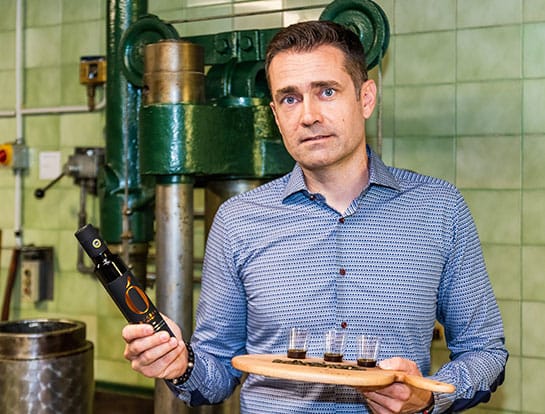
Rapeseed oil is very healthy. Can you tell us about it?
It contains very beneficial ingredients and is one of the most sought-after oils in the world. It is much more durable than other oils, as it can withstand very high temperatures - even when heated several times. It is high in monounsaturated and polyunsaturated fats omega 3, 6 and 9. It is extremely low in saturated fatty acids (only approx. 6g/100ml, e.g. olive oil 14g/100ml, sunflower oil 11g/100ml). It is a rich source of vitamin E, contributes to lowering cholesterol, has a beneficial effect on cognitive development in children due to its high content (among vegetable oils) of omega-3 fatty acids, lowers elevated blood fat levels and reduces the occurrence of heart disease. In general, it is very good for the immune system.
Receive a recipe booklet with Kócbek products
Fill in the form below and you will receive selected recipes from the Kócbek oil mill to the email address you entered.


